


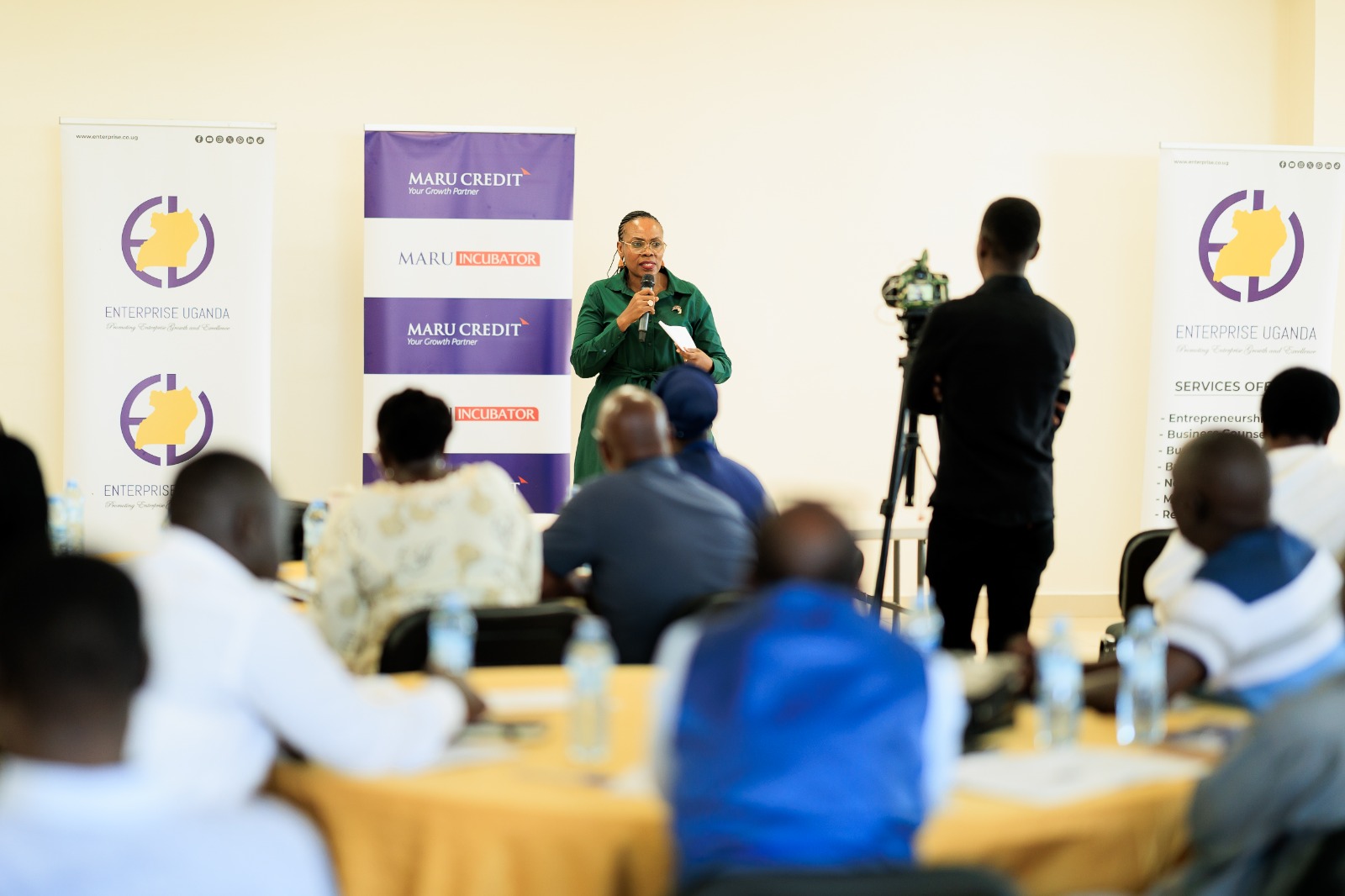
In a strategic move to address the high mortality rate of small businesses in the country, MARU Credit, in partnership with Enterprise Uganda, Wednesday launched an inaugural Business Incubator Program aimed at transforming informal enterprises into "bankable" entities.
The three-day workshop, which opened on February 25 at the Enterprise Uganda offices in Kampala, has attracted 80 entrepreneurs from various sectors, including education and agribusiness.
The intervention comes at a critical time for the economy. Data from the Uganda Bureau of Statistics (UBOS) indicates that while Small and Medium Enterprises (SMEs) constitute 90 percent of the private sector and employ over 2.5 million Ugandans, nearly half of them do not survive past their fifth anniversary.
Speaking at the launch, Mr. Joshua Mazune, the Managing Director of MARU Credit, noted that the primary hurdle for local entrepreneurs is not a lack of vision, but a lack of organisational structure.

"Ugandan SMEs do not fail for lack of ambition; they fail for lack of structure," Mr. Mazune said. "At MARU Credit, we are not merely financing businesses; we are building bankable enterprises. This incubator represents a deliberate shift from simply lending capital to cultivating financially disciplined, investment-ready entrepreneurs."
Despite their 80 percent contribution to manufactured output, many SMEs remain locked out of formal credit markets. Recent figures from the Bank of Uganda highlight that inadequate financial documentation and poor risk management practices continue to make small enterprises appear "unlendable" to commercial tier-lenders.
Ms. Rosemary Mutyabule, an official from Enterprise Uganda, emphasized that the partnership seeks to "demystify" access to capital. The curriculum covers essential business pillars, including entrepreneurial mindset, governance, bookkeeping, and working capital management.
“Our core mandate is to support businesses, and we do so through strong partnerships. The MARU Incubator will help demystify access to capital while enabling entrepreneurs to gain a deeper understanding of their businesses and strengthen their readiness for growth,” Mutable said.
For many participants, the program is a chance to rectify past operational mistakes. Ms. Grace Kwagala, an entrepreneur currently establishing an international school, expressed a need for better cash-flow management skills.
On his part, Mr. Kafumba Peter, who operates in the agri-solutions sector, admitted that even without previous loans, his business lacked the formal structure needed for sustainable scaling.
"I realized there is still a lot I need to understand about structured financing and debt management," Mr. Peter said. "I want to learn how to use credit strategically, not just access it, but manage it responsibly."
The incubator program includes mentorship and post-training work plans to ensure that the 80 entrepreneurs implement the lessons within their respective businesses.
MARU Credit officials confirmed that this is the first of several cohorts planned to strengthen the capability of the SME sector throughout 2026.
